The Court of Love – a retreat for storytellers – final call!
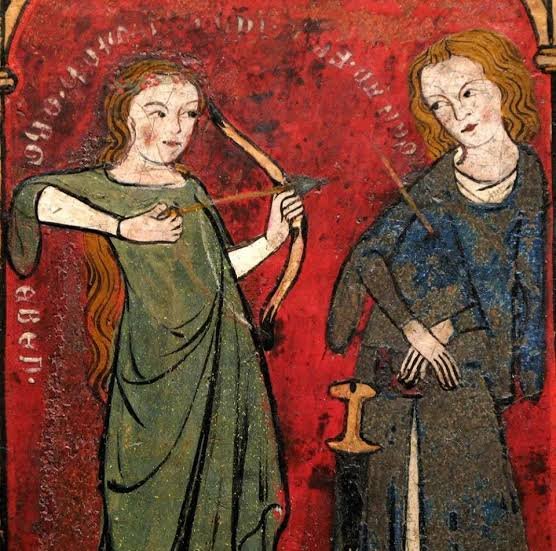
“now I feel myself betrayed
because I did not tell my love”
 

Beatritz de Dia (1140-1175)

Legend says that Eleanor of Aquitaine encountered the Sufis in Jerusalem on the First Crusade. Inspired by their love poetry, filled with images of the beloved searching for the divine, she returned home and created a ‘Court of Love’ at Poitiers. Here troubadours gathered to pitch their skills of storytelling and song, composition and improvisation, poetry and music on the theme of love – human love, love for the Queen, and divine love for the Virgin Mary. Being a troubadour demanded you had a wide set of skills and repertoire, that included: all the courtly love epics and romances; inventing rhyme schemes; tenso – debates between two troubadours; pastorelle – narratives where knights fall in love with shepherdesses; planhz -complaints and laments; sirventes – political satire; alba – morning songs; seren – evening songs.

Beatritz de Dia (1140-1175) was a Torbairitz – a female troubadour and her sung poems are rare because they exist alongside the music that went with them.

“I’ve been in great distress of mind
about a knight whom I possessed,
how I’ve loved him to excess
I want known throughout all time
now I feel myself betrayed
because I did not tell my love
in great torment so I prove
In bed or in my clothes arrayed.”

Beatritz de Dia (1140-1175)

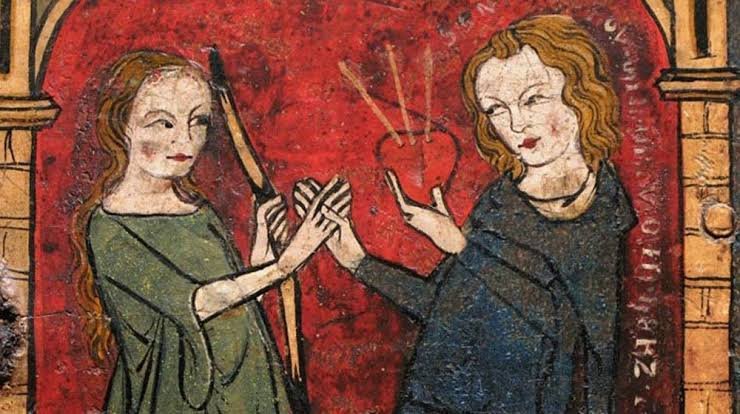
Storytellers Hugh Lupton and Eric Maddern have been running retreats for storytellers for thirty years exploring myth and landscape. I joined their team in 2025 for the retreat on ‘Creation Myth’, and this year we are exploring love! We will look at fairytales and myths, from human love to the wild passion of gods and goddesses, from the love of creatures and spirits to the mystical search for the divine. We will uncover images of bed tricks, burning hearts, unrequited love, green jealousy, true love, and a hazelnut that contains love for the whole World. We will play knights and Cupid and learn the skills of the bow and practise archery! We will explore the tools of the Troubadour and compose our own poems and stories. We will learn about Eleanor of Aquitaine and her influence on stories and storytelling. We will visit a medieval castle, church and sacred well. This is not a ‘how to tell stories’ course but a mutual exploration, a time out of time, where we come together to breathe, move, talk, imagine, share, walk, eat, think – stories – and fall in love with them and be renewed! Come and be guided by your hosts Hugh Lupton, Eric Maddern and Sally Pomme Clayton. Majnun says in the Arabic love story of ‘Layla and Majnun’
‘Make my love a hundred times greater than it is today! Let me love for love’s sake!’ Welcome to our ‘Court of Love’!
Tuesday September 1 from 3pm to Sunday September 6 midday. The cost of the retreat is: £640 which includes all tuition and events, shared accommodation and three vegetarian meals a day. Plus all the perks of being at Cae Mabon such as forest, river, thatched roundhouse and hot tub! Find out more about Cae Mabon.

To reserve the last remaining places email Eric on connect@caemabon.co.uk
Walking with Words

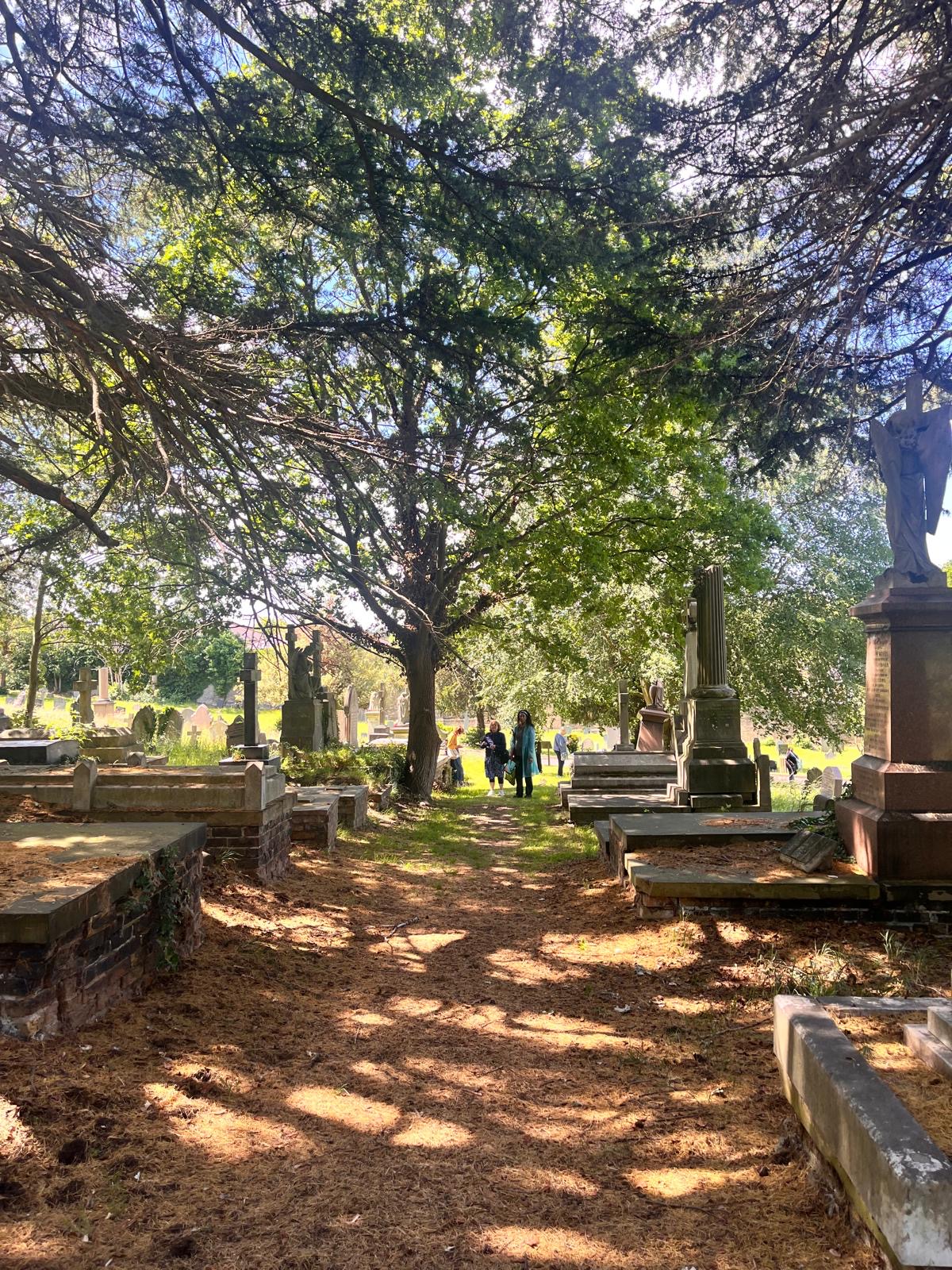
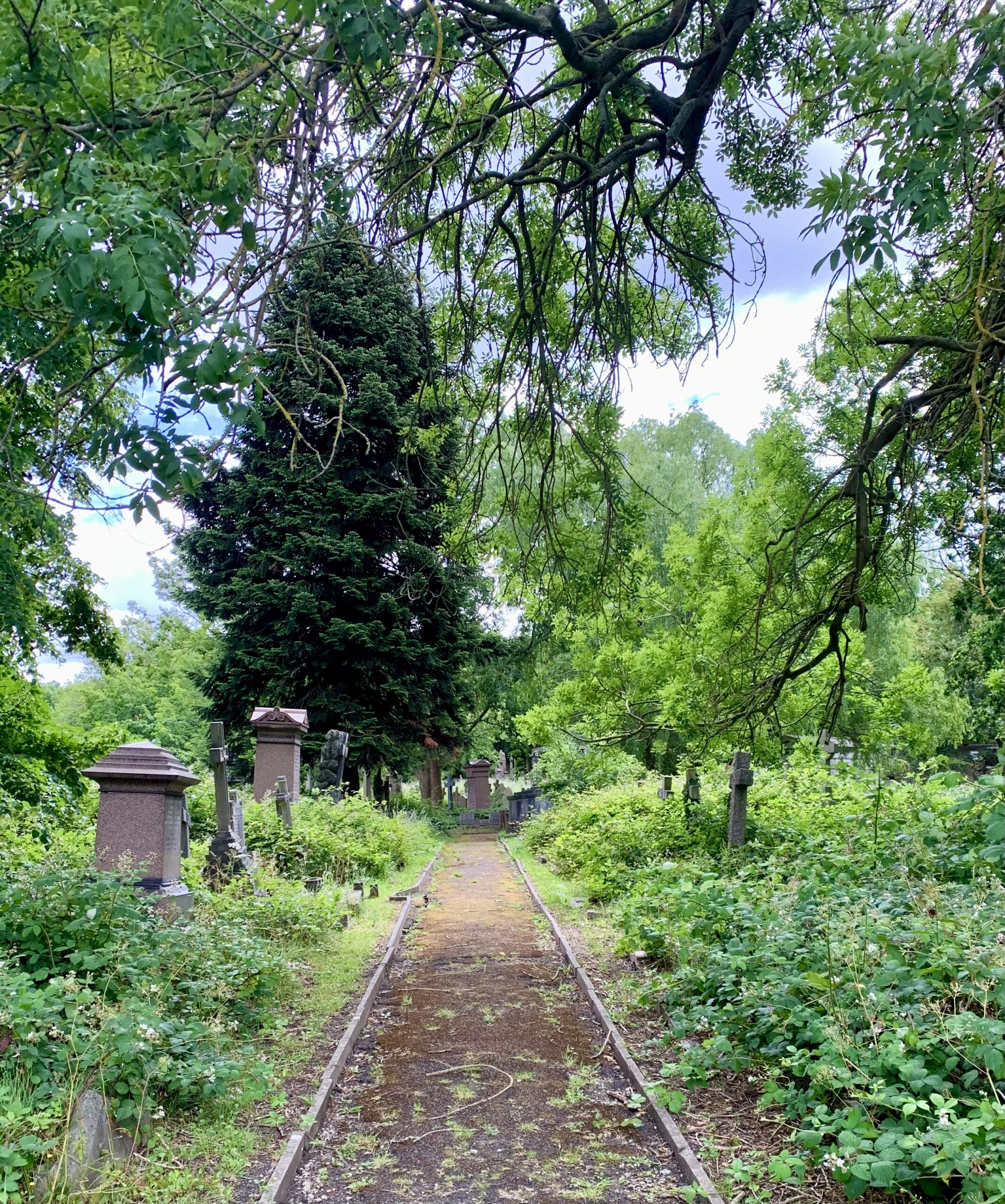
We have had all weathers at West Norwood Cemetery in the last month. Lashing rain soaking our pages, washing away pencil jottings, deep delightful dappled shade, uplifting wind filling hearts and skirts, scalding heat slowing us down. My four week creative walking and writing course is nearly over. One participant said, “I was so excited it was going to last four weeks, now I feel greedy and I want to go on and on.”
         The course has combined walking and writing, wandering and wondering. I wanted the course to be a way of opening to the imagination and the world of stories that is both outside and inside.
    “A walk is only a step away from a story and every path tells,” writes Robert MacFarlane in his multi-layered ‘The Old Ways – a journey on foot’. I wanted participants to observe, collect, imagine and create their own stories through walking.

I divided the cemetery into four sections, four walks, each on a different theme: the senses; beauty; time and trees, and the final walk – then and now. The walks were inspired by different areas in the cemetery. The theme of beauty linked to the Greek influence in the cemetery, from the many gothic graves referencing ancient Greek architecture, to the Hellenic Enclosure bought by Greeks in 1842 for Orthodox burials, with its own chapel, St Stephens, a mini acropolis, recently restored. We explored ancient Greek ideas about beauty, and Plato’s description of beauty as a ladder to immortality, that climbs from physical beauty, through “the great mass of mortal rubbish” to “beauty itself” where “beholder and beheld become one.” The Symposium’.

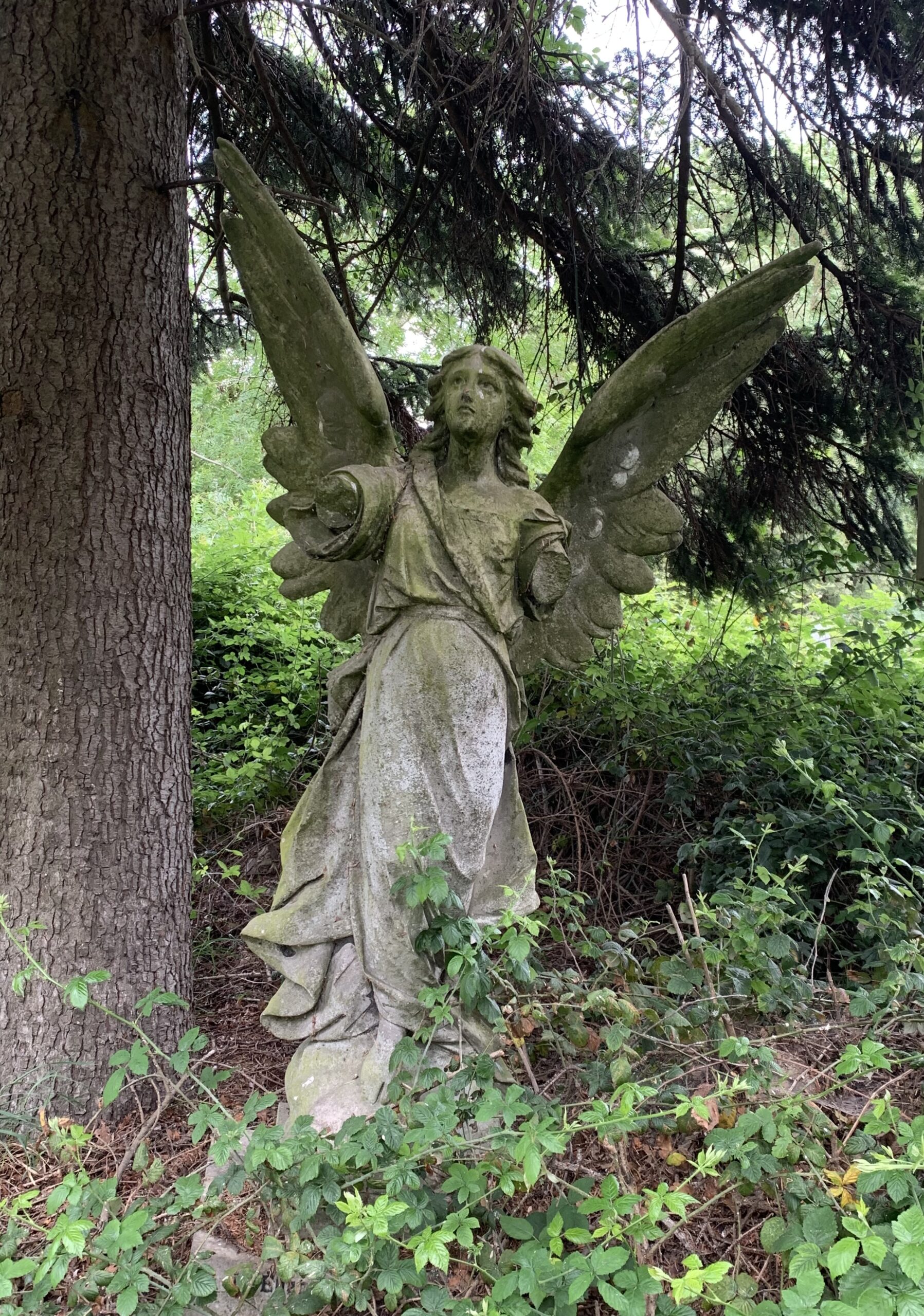
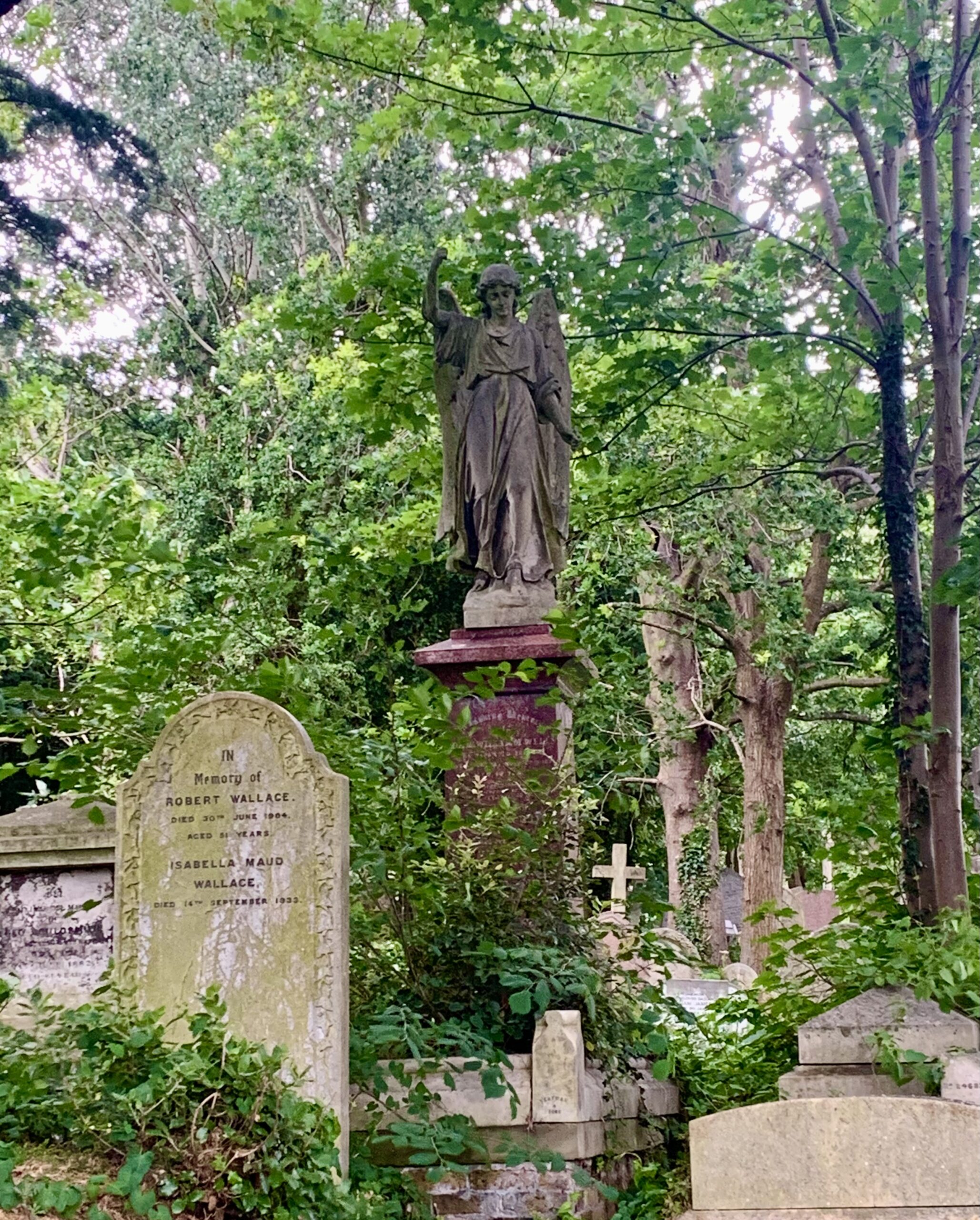
I led the group down secret paths, passed: tombs of tumbled stones; carved women draped with stone cloth; squirrels sculpted and real; stone angels; green flash of parakeets; curling carved ivy; stone roses; bunches of carved lily of the valley; a lone fox who knows all secrets paths; stone birds; stone vases; stone masks, even a stone lamb. And some stones carved to look like metal, others carved to look like monuments from neolithic times, or obelisks from the future. There really are stories in every step and I wanted participants to “bodily enter a story by walking it” as Rebecca Solnit writes in her wide-ranging inspirational Wanderlust – a history of walking’. And so we walked our stories, as one participant said, “a profound experience, the sensory walk in the rain, then translating it to page was soothing and enriching.”

Looking for stories everywhere is just a state of mind, and I wanted to give participants some keys to do this, through: observation; listening; collecting images; finding found words along the way; picking up fragments of text from graves; catching fleeting thoughts and memories triggered by strange architecture hidden among brambles, daisies and deep trees. I wanted them to listen out for stories, feelings, tangents, that pop up inside us all, and jot them down. Practicing catching the first idea, before it has gone, before it vanishes and other thoughts creep in, is always the best in my experience! Many participants had not done anything like this before and did not think of themselves as writers or storytellers. But with a few keys, they soon were connected to their imaginations, and moving, powerful, beautiful words flowed out. One participant wrote about the process, “such bright sun into decay – a great foray into the cemetery’s secret treasure – undergrowth, memory…”

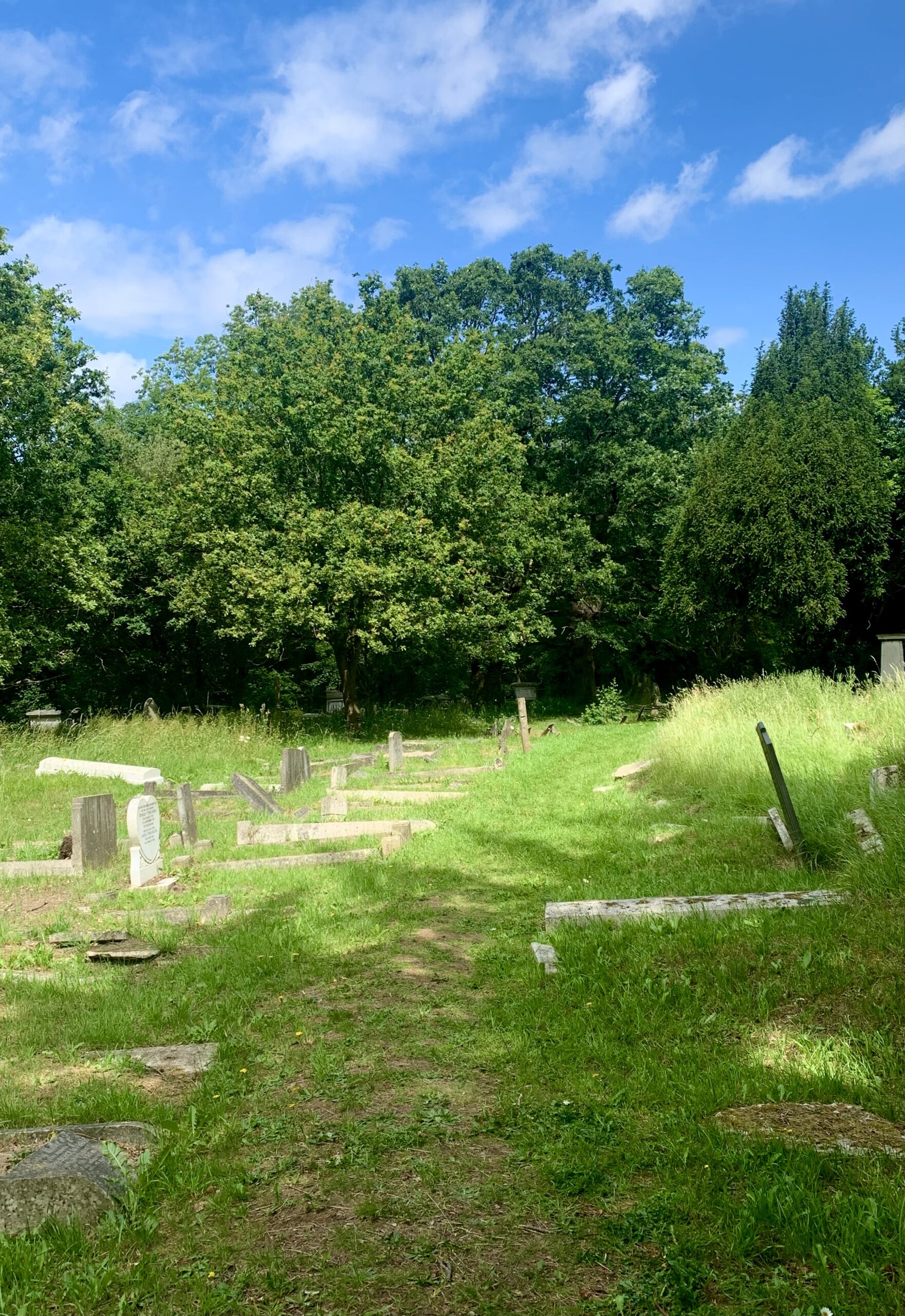
Robert MacFarlane writes that a path leads “onwards in space but also backwards in time.” And walking the paths we imagined them arranged back in 1837, and then we slipped backwards to the meadows sweeping up the hill, and before that to the dense, mysterious Great North Wood that covered parts of south east London. Some 13 majestic oak trees in the cemetery are more than 500 years old and were part of that old wood. Solnit says that humans are words that walk. Walking corresponds to language, walking is a language, and in Walking with words we have walked our talk. “Exploring the world is one of the best ways of exploring the mind and walking travels both terrains” says Rebecca Solnit. I have written my own song to West Norwood Cemetery and will post it another time.

The lush, hidden nature along the paths has restored us all. A participant wrote, “the path is full of life, invigorating the soul.” The cemetery is peaceful and rejuvenating, calming and energising, this place of death is so alive, so very alive.

Thankyou to Teresa Donoghue and West Norwood Cemetery and Thriving Norwood for funding this course so it could be free for participants, and for allowing me to be so inventive, daring and supporting me to create and lead it.